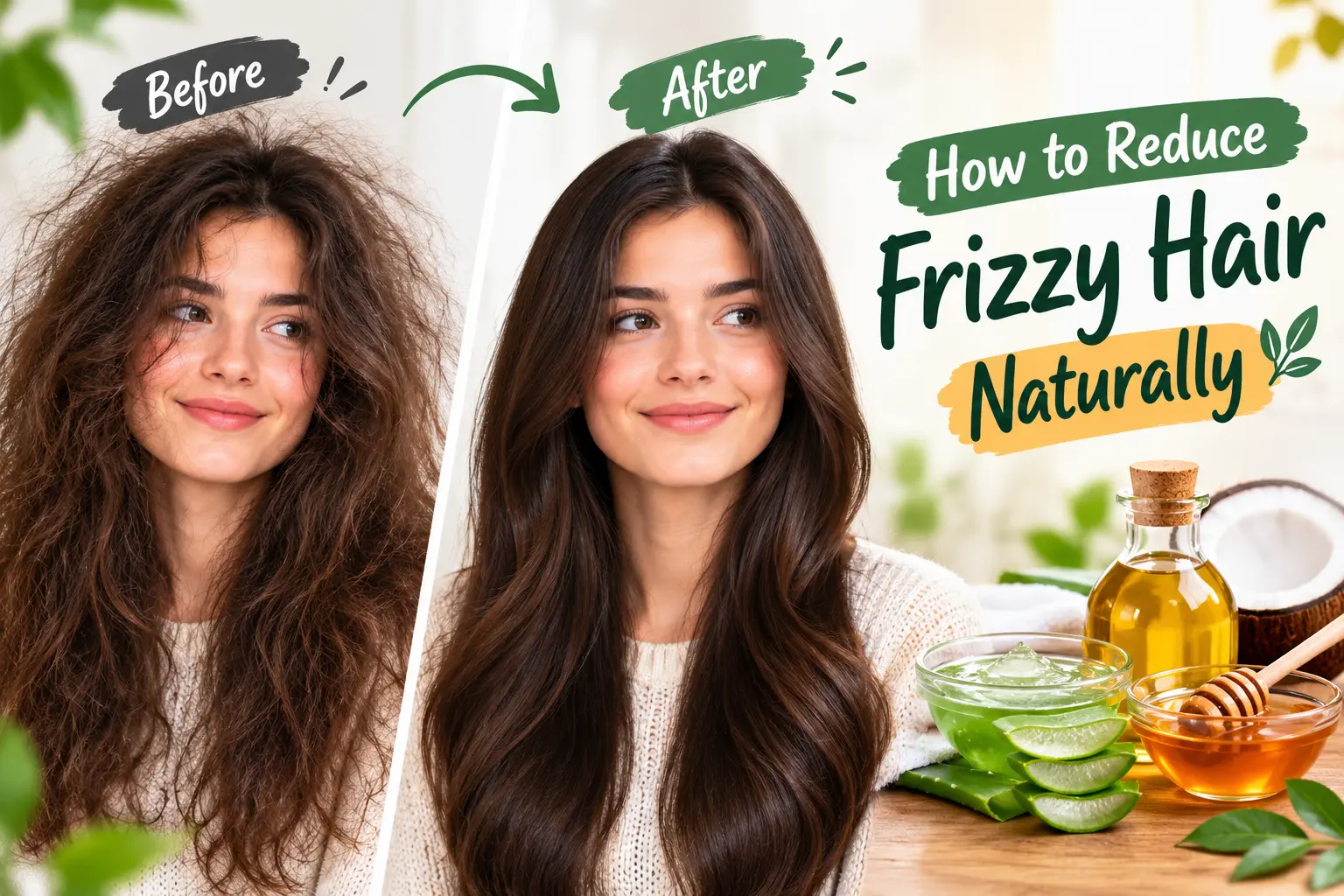
How to Reduce Frizzy Hair Naturally: 10 Easy Tips for Smooth, Healthy Hair
How to Reduce Frizzy Hair Naturally Frizzy hair can be frustrating, especially when you spend time styling it only to see it become dry, puffy, or difficult to manage a few hours later. Humidity, heat styling, rough towel drying, and a lack of moisture can all contribute to frizz. The good news is that you do not always need expensive salon treatments or complicated hair care products to make your hair look smoother.
Learning how to reduce frizzy hair naturally starts with understanding what your hair needs. Gentle washing, proper conditioning, careful drying, and a few simple changes to your daily routine can help improve its appearance and manageability. Natural oils and homemade treatments may also help soften the hair, although their results depend on your hair type and the condition of your strands.
In this guide, you will discover practical ways to control frizz naturally, common mistakes to avoid, and simple habits that can help your hair look healthier over time.
1. Understand What Causes Frizzy Hair
Frizz occurs when individual hair strands become uneven, causing them to lift away from the rest of the hair. The outer layer of the hair, known as the cuticle, helps protect the inner structure. When the cuticle becomes rough or damaged, hair may appear less smooth and reflect light unevenly.
Humidity is another major factor. Hair can absorb moisture from the surrounding air, which changes the shape of the strands and makes frizz more noticeable. This is especially common for people with naturally curly, wavy, or textured hair, although straight hair can also become frizzy in humid conditions.
Other causes include frequent heat styling, chemical treatments, excessive brushing, and friction from towels or pillowcases. Identifying the main cause of your frizz is important because the best solution depends on whether your hair needs more conditioning, less heat exposure, or better protection from humidity.
2. Use a Gentle Shampoo and Conditioner
Choosing the right shampoo is one of the simplest ways to improve frizzy hair. A harsh shampoo may leave your hair feeling dry, particularly if you already have curly, color-treated, or naturally coarse strands. Look for a gentle formula that cleans your scalp without leaving your lengths feeling excessively stripped.
Conditioner is equally important because it helps smooth the hair surface, improve slip, and make detangling easier. Apply it mainly to the mid-lengths and ends, where dryness and damage are often more noticeable. Leave it on for the recommended time before rinsing thoroughly.
Avoid washing your hair more frequently than necessary if doing so makes it dry. Your ideal washing schedule depends on your scalp, lifestyle, and hair texture. Some people need frequent washing, while others can comfortably wash less often. The goal is to keep your scalp clean while maintaining softness through the lengths of your hair.
3. Apply Coconut Oil or Another Suitable Natural Oil
Coconut oil is a popular natural option for people who want to manage dryness and improve hair softness. It can penetrate the hair shaft to some extent and may help reduce protein loss in certain circumstances. However, it is not a guaranteed cure for frizz, and results vary depending on hair type and how the oil is used.
To try it, apply a small amount to the lengths and ends of dry hair before washing. Leave it on for approximately 20 to 30 minutes, then shampoo as usual. Start with a very small amount because using too much can make hair greasy, heavy, or difficult to rinse clean.
Other oils, such as argan or jojoba oil, may help coat the hair and reduce the appearance of dryness. These oils work differently from coconut oil and may be more suitable for certain hair types. Fine hair usually needs less product, while thick or coarse hair may tolerate a little more. Avoid applying heavy oils directly to the scalp if they cause itching, irritation, or buildup.
4. Stop Rubbing Your Hair with a Regular Towel
One common mistake is rubbing wet hair vigorously with a towel. Wet hair is more vulnerable to mechanical damage, and repeated friction can roughen the cuticle, encourage breakage, and make frizz more noticeable.
Instead, gently squeeze excess water out of your hair using your hands. Then wrap it in a soft microfiber towel or a clean cotton T-shirt and press lightly to absorb moisture. You do not need to twist your hair tightly or rub it until it feels completely dry.
This small adjustment can make a noticeable difference over time, particularly if your hair is curly, bleached, or prone to breakage. It also reduces tangling and makes the next steps in your hair care routine easier.
5. Detangle Your Hair Carefully
Brushing tangled hair aggressively can cause unnecessary breakage and make the overall texture look rough. The best detangling method depends on your hair type. Straight hair is often easier to brush when dry, while curly and tightly textured hair is generally easier to detangle when damp and coated with conditioner.
Use a wide-tooth comb or a suitable detangling brush, and work through small sections rather than pulling through every knot at once. Begin near the ends and gradually move upward toward the roots. Hold the section above the knot to reduce tension on your scalp and hair.
If you regularly experience tangles, consider whether your conditioner provides enough slip and whether your ends need a trim. Split ends cannot be permanently repaired with natural oils or homemade masks. Removing severely damaged ends can help your hair look neater and reduce further splitting along the strand.
6. Use Aloe Vera for Lightweight Moisture
Aloe vera is often used in homemade hair care because it contains water and forms a light coating on the hair. Some people find that aloe-based products help their hair feel softer and easier to manage. However, scientific evidence for aloe vera as a specific frizz treatment is limited, so it is best viewed as an optional conditioning ingredient rather than a guaranteed solution.
If you want to try aloe vera, choose a commercially prepared hair product containing aloe or use a suitable, clean product intended for cosmetic use. Apply a small amount to damp hair, concentrating on the lengths. Check how your hair feels once it dries because some formulas may leave a residue or make certain textures feel stiff.
Always patch-test a new product before using it more widely. Avoid applying aloe vera if you know you are allergic to it or if it causes itching, redness, or irritation. You do not need aloe vera to achieve smoother hair; a good conditioner and gentle drying routine may be enough for many people.
7. Reduce Heat Styling
Frequent use of straighteners, curling irons, and high-temperature blow dryers can damage the hair’s protective structure. Over time, this damage may lead to roughness, split ends, dryness, and increased breakage. Although heat styling can temporarily make hair look smoother, repeated excessive heat can worsen the underlying problem.
Allow your hair to air-dry when practical, but remember that constantly leaving hair wet for long periods is not necessary for healthy hair either. If you use a blow dryer, select a lower or moderate heat setting and keep the dryer moving rather than concentrating hot air on one section.
When using heated styling tools, apply a suitable heat-protectant product and use the lowest temperature that works for your hair. Natural oils should not automatically be treated as substitutes for a tested heat protectant. Reducing unnecessary heat exposure is one of the most effective ways to prevent additional damage.
8. Try a Deep-Conditioning Hair Mask
A deep-conditioning mask can help dry hair feel softer, more flexible, and easier to detangle. You do not need a complicated homemade recipe to achieve these benefits. A ready-made conditioning mask formulated for your hair type may offer more predictable results than mixing several kitchen ingredients together.
For a simple routine, apply a conditioning mask after shampooing, following the product’s instructions. Focus on the mid-lengths and ends, then rinse as directed. Depending on your hair’s needs, using a mask once a week may be sufficient. Hair that is fine or easily weighed down may need less frequent treatment.
Be cautious with homemade mixtures containing lemon juice, baking soda, strong essential oils, or other potentially irritating ingredients. These can disrupt comfort, irritate the scalp, or contribute to dryness. A gentle, well-formulated conditioner is generally a more reliable choice than experimenting with harsh DIY treatments.
9. Protect Your Hair While Sleeping
Friction during sleep can contribute to tangling and roughness, especially if you move around frequently or have long, curly, or fragile hair. A few simple nighttime habits may help your hair stay more manageable until morning.
A satin or silk pillowcase can reduce friction compared with some traditional cotton pillowcases. You can also loosely braid long hair or gather it into a comfortable, loose hairstyle. Avoid tying it tightly because constant tension may contribute to breakage around the hairline.
If your hair becomes dry overnight, try applying a tiny amount of a suitable leave-in conditioner to the ends before bed. Avoid using so much product that it leaves your hair greasy or transfers heavily onto your pillowcase. The best nighttime routine is one that protects your strands without pulling on them or irritating your scalp.
10. Adjust Your Routine for Humid Weather
Humidity can make frizz difficult to control even when your hair is healthy. When the air contains more moisture, hair can absorb some of that moisture and change shape, particularly if its cuticle is damaged or its texture is naturally curly.
During humid weather, use a lightweight leave-in conditioner or an anti-frizz product that is designed to help manage moisture in the air. A small amount is usually better than applying several heavy products together. If your hair is fine, choose a lightweight formula; thicker or curlier hair may benefit from richer conditioning products.
It is also helpful to avoid repeatedly touching or brushing your hair throughout the day. Excessive handling can disturb the hair’s natural pattern and increase the appearance of flyaways. Once you have styled your hair, let it settle and use a small amount of suitable finishing product only when needed.
11. Maintain a Balanced Diet and Healthy Hair Habits
Hair health is influenced by overall nutrition, although eating particular foods will not instantly eliminate frizz. Hair is made primarily of a protein called keratin, so getting enough dietary protein is important for normal hair growth. Eggs, fish, beans, lentils, dairy products, nuts, and other protein-rich foods can contribute to a balanced diet.
Iron, zinc, and other nutrients also support normal hair function. However, taking supplements without a demonstrated need is not a reliable way to improve hair texture and can sometimes be harmful. If you have persistent hair loss, unusual breakage, or other symptoms, a healthcare professional can help determine whether a nutritional issue or another condition may be involved.
Adequate hydration, sufficient sleep, and gentle hair handling are useful parts of a healthy routine. Drinking extra water beyond your body’s needs will not directly repair a damaged hair cuticle, but maintaining general health supports normal body function. Focus on consistent habits rather than expecting one food, oil, or supplement to solve every hair concern.
12. Common Mistakes to Avoid When Treating Frizzy Hair
One common mistake is applying too much oil in the hope of making hair smoother. While a small amount may help reduce friction and improve shine, excessive oil can weigh down the hair and create buildup. Begin with a tiny quantity and adjust according to your hair’s response.
Another mistake is expecting immediate, permanent results from a homemade mask. Conditioners, oils, and leave-in products can temporarily improve the feel and appearance of hair, but they cannot permanently restore severely damaged strands. Consistent care and reducing the causes of damage are more useful than constantly switching between DIY remedies.
Finally, avoid copying someone else’s routine without considering your own hair texture. Fine, straight hair may need lightweight products, whereas thick, curly hair may require richer conditioning and more careful detangling. If your scalp becomes irritated or your hair suddenly changes significantly, stop any new product that may be causing the problem and seek professional advice when appropriate.
Conclusion
Reducing frizzy hair naturally is mainly about protecting the hair, maintaining moisture, and minimizing unnecessary friction and damage. Gentle shampooing, regular conditioning, careful detangling, less heat styling, and suitable natural oils can all help improve how your hair looks and feels.
You do not need to follow every tip at once. Start with two or three changes, such as using conditioner consistently, drying your hair gently, and avoiding excessive heat. Give your routine time to work, and adjust the products to your hair type.
Remember that some frizz is completely normal, particularly in humid weather or naturally curly hair. The goal is not to eliminate every flyaway but to keep your hair comfortable, manageable, and healthy-looking with a routine you can maintain.