Best Moisturizer for Oily Skin in Summer: How to Choose the Right One
Best Moisturizer for Oily Skin in Summer even more challenging to manage. Hot weather, humidity, sweat, and excess sebum can leave your face looking shiny just a few hours after washing it. Choosing a moisturizer may seem unnecessary when your skin already produces plenty of oil, but hydration remains an important part of a balanced skincare routine.
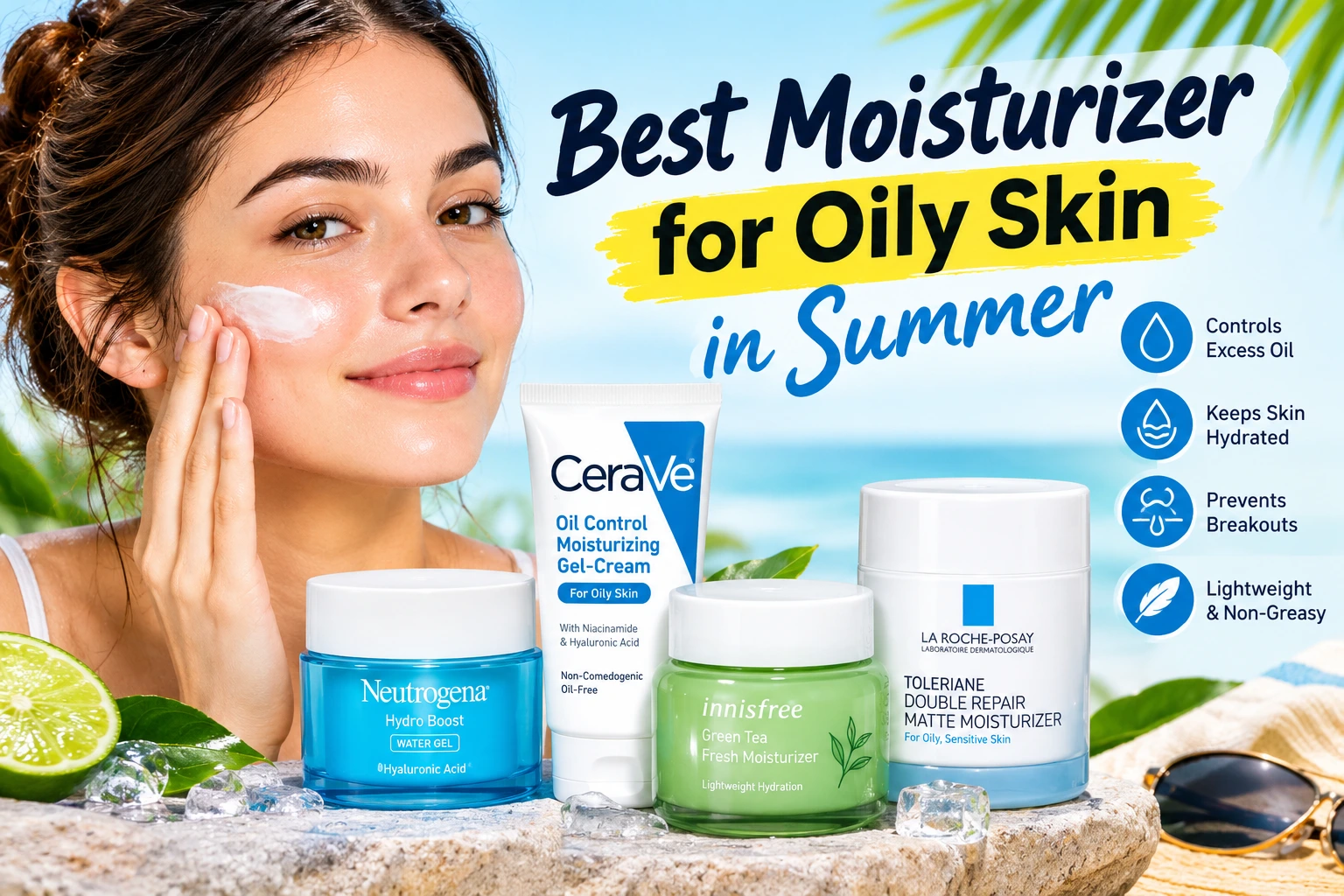
The best moisturizer for oily skin in summer is usually a lightweight gel, water-based lotion, or gel-cream that hydrates without leaving a heavy, greasy feeling. Products labeled oil-free and non-comedogenic are worth considering, especially if you are prone to clogged pores or breakouts. However, the right choice depends on your skin’s individual needs, not simply the season.
In this guide, you will learn which moisturizer ingredients to look for, how to select a suitable formula, which mistakes to avoid, and how to build a simple summer skincare routine.
Why Oily Skin Still Needs a Moisturizer in Summer
Oily skin produces more sebum than necessary for a matte appearance, but that does not mean it always has enough moisture. Sebum is the natural oil produced by the skin, whereas hydration relates to its water content. These are different things, so a face can feel greasy while also experiencing dryness or dehydration.
Using an appropriate moisturizer helps support the skin barrier, which protects against external irritants and reduces excessive water loss. When the skin barrier becomes irritated or damaged, you may notice tightness, flaking, redness, or increased sensitivity. A lightweight moisturizer can help maintain comfortable, balanced skin without adding an unnecessarily heavy layer.
Skipping moisturizer is not a reliable way to control oil production. Instead, choose a formula that suits your skin type and apply an appropriate amount after cleansing. Dermatologists commonly recommend oil-free and non-comedogenic products for people concerned about oily or acne-prone skin. These labels can help narrow your options, although individual reactions still vary.
What Makes the Best Moisturizer for Oily Skin in Summer?
The ideal summer moisturizer should provide hydration while feeling comfortable in hot and humid conditions. A lightweight texture is often a good starting point because it spreads easily and generally feels less heavy than a rich cream. Gel moisturizers and light lotions are particularly practical for people who dislike a greasy finish.
Another important feature is whether the product is non-comedogenic, meaning it is formulated or tested to be less likely to clog pores. If you regularly experience blackheads, whiteheads, or acne, this label can help you choose a more suitable product. Remember that it does not guarantee that a product will never cause breakouts for every individual.
You should also consider fragrance and other potentially irritating ingredients if your skin is sensitive. A simple formula with well-tolerated moisturizing ingredients may be more useful than a product containing numerous active ingredients. The goal is to keep the skin hydrated and comfortable rather than trying to eliminate every trace of natural oil.
Best Ingredients to Look for in a Summer Moisturizer
1. Hyaluronic Acid
Hyaluronic acid is a humectant, which means it helps attract and retain water in the skin. It is commonly used in lightweight gels and water-based moisturizers because it can provide hydration without requiring a thick, oily texture.
For oily skin, a moisturizer containing hyaluronic acid can be a practical choice when your face feels tight after cleansing. It can help improve the feeling of hydration while maintaining a lightweight finish. The overall formulation still matters, so check the full ingredient list rather than choosing a product based on one ingredient alone.
2. Glycerin
Glycerin is another widely used humectant that helps draw water into the outer layers of the skin. It is found in many affordable and premium moisturizers and can be beneficial for different skin types, including oily and combination skin.
During summer, a glycerin-containing lotion or gel-cream can help prevent your face from feeling dry after washing. It can also complement other moisturizing ingredients without necessarily making the product feel greasy. The texture and concentration of the complete formula influence how comfortable it feels on your skin.
3. Niacinamide
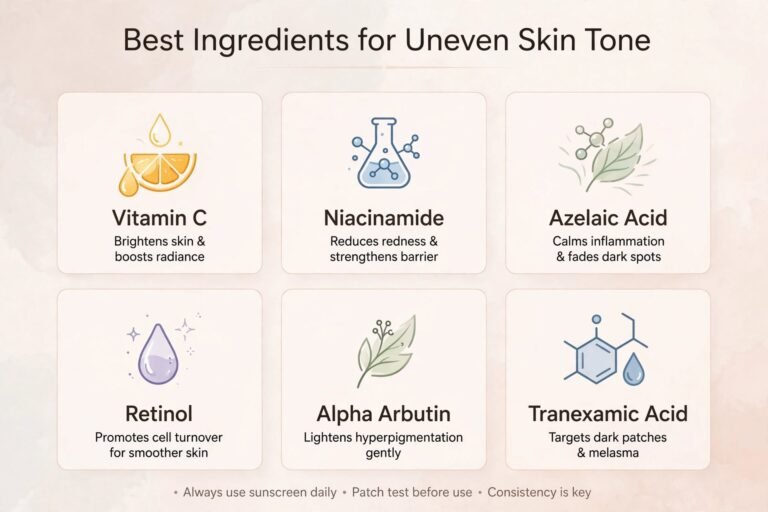
Niacinamide, a form of vitamin B3, is frequently included in skincare products designed for uneven skin tone, visible pores, and oily or blemish-prone skin. It can support the skin barrier and may help improve the appearance of excess shine over time, although results depend on the formulation and individual skin.
If you are interested in niacinamide, consider a moisturizer with a moderate concentration rather than immediately choosing the strongest available product. Higher concentrations are not automatically better and may irritate some people. Introduce new products gradually and discontinue use if you experience persistent irritation.
4. Ceramides
Ceramides are lipids naturally found in the skin barrier. They help support its protective structure and reduce water loss, making them useful ingredients in moisturizers for dry, sensitive, and dehydrated skin.
People with oily skin do not necessarily need to avoid ceramides. A lightweight gel-cream containing ceramides may provide useful barrier support, particularly if you use acne treatments that cause dryness. Choose a texture that feels comfortable rather than assuming all ceramide moisturizers are thick or greasy.
Gel Moisturizer vs. Cream Moisturizer: Which Is Better?
Texture is one of the most noticeable differences between moisturizer types. Gels are often lightweight and water-based, while creams generally contain a richer blend of moisturizing ingredients. Lotions fall somewhere between these textures, although individual formulations vary considerably.
For many people with oily skin, a gel or light lotion is a convenient summer option. These products can provide hydration without the heavier sensation that some traditional creams leave behind. If you live in a hot, humid climate, a lightweight formula may also layer more comfortably beneath sunscreen.
However, cream moisturizers are not automatically unsuitable for oily skin. If you experience dry patches, irritation, or peeling from acne medication, you may benefit from a more nourishing formula. You can also use a lightweight moisturizer across most of your face and apply a richer product only to areas that need extra care.
| Feature | Gel Moisturizer | Lightweight Lotion | Cream Moisturizer |
|---|---|---|---|
| Texture | Light and often water-based | Fluid and easy to spread | Usually richer |
| Summer comfort | Often excellent | Often comfortable | Depends on the formula |
| Hydration | Suitable for many oily skin types | Suitable for many skin types | Useful for dryness and barrier support |
| Best suited for | Oily or combination skin | Oily, normal, or combination skin | Dry patches or dehydrated skin |
| What to check | Hydrating ingredients and pore suitability | Oil-free or non-comedogenic labeling | Whether the texture feels too heavy |
No single format works best for everyone. Your skin’s comfort, hydration level, sensitivity, and response to the product should guide your decision.
How to Choose a Moisturizer for Your Specific Skin Concerns
Oily and Acne-Prone Skin
If you have oily skin with frequent breakouts, begin with a lightweight, non-comedogenic moisturizer. Look for a product that hydrates without leaving a heavy residue, and avoid assuming that a strong, drying formula will automatically prevent acne.
You should also keep your routine simple. Using several exfoliating products, acne treatments, and harsh cleansers together can irritate the skin and make it harder to identify the cause of a reaction. A gentle cleanser, suitable moisturizer, and sunscreen provide a practical foundation for daily care.
If your acne is persistent, painful, or leaving scars, consider consulting a dermatologist. A moisturizer can support your skin barrier, but it is not a replacement for appropriate acne treatment.
Oily and Sensitive Skin
Sensitive skin may react to fragrance, certain preservatives, or active ingredients, although the trigger varies from person to person. If your face frequently stings, becomes red, or feels uncomfortable after applying skincare, prioritize a simple, fragrance-free moisturizer.
A lightweight lotion or gel-cream may work well if it provides enough hydration without irritation. Avoid introducing multiple new products at the same time because doing so makes it more difficult to determine which ingredient is causing a reaction.
Before applying a new moisturizer to your entire face, test it on a small area according to the product’s instructions. Stop using it if you develop persistent burning, swelling, or a rash, and seek medical advice when symptoms are significant.
Oily and Dehydrated Skin
Dehydrated skin lacks sufficient water, while oily skin produces excess sebum. These conditions can occur together, so your face may look shiny while feeling tight or uncomfortable.
A moisturizer containing glycerin or hyaluronic acid may help improve hydration without requiring a thick cream. Apply it after gentle cleansing, following the product directions, and observe how your skin feels throughout the day.
Avoid trying to correct dehydration by washing your face repeatedly or using aggressive exfoliants. These habits may irritate the skin barrier. If tightness and flaking continue despite a gentle routine, you may need a richer moisturizer or professional advice.
How to Apply Moisturizer Correctly During Summer
Start by washing your face with a gentle cleanser suited to oily skin. Use lukewarm water rather than very hot water, and avoid scrubbing your face to remove every trace of oil. If you sweat heavily, cleansing afterward can help remove sweat and buildup without requiring constant washing throughout the day.
After cleansing, gently pat your face so that it remains slightly damp. Apply a small amount of moisturizer and spread it evenly over your face, adjusting the amount according to the product instructions and your skin’s needs. Applying moisturizer to slightly damp skin can help retain water and make the product easier to spread.
In the morning, finish your routine with a broad-spectrum sunscreen rated SPF 30 or higher. Choose a sunscreen that suits oily skin and feels comfortable enough to use consistently. Moisturizer and sunscreen serve different purposes, so a regular moisturizer should not be treated as sun protection unless it also provides appropriate labeled SPF protection.
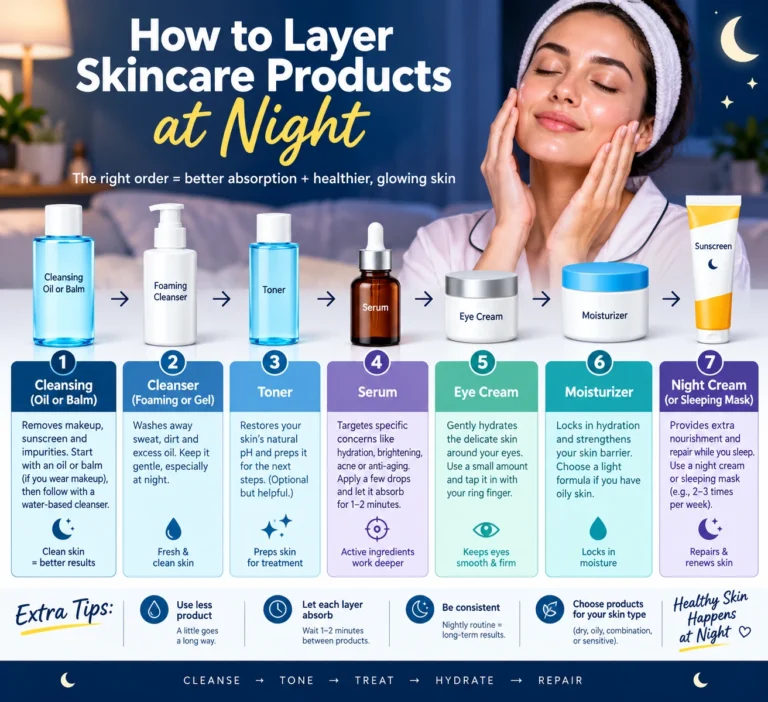
At night, cleanse your face to remove sunscreen, sweat, and daily buildup, then apply your moisturizer. If your skin feels comfortable and remains hydrated, there is usually no need to add numerous extra products simply because it is summer.
Common Moisturizer Mistakes to Avoid
One common mistake is choosing products based only on claims such as oil control, pore tightening, or an instant matte finish. These descriptions may sound appealing, but they do not tell you everything about the product’s suitability. Check the ingredients, texture, and instructions before purchasing.
Another mistake is using harsh cleansers or repeatedly washing the face whenever shine appears. Natural sebum is part of the skin’s protective system, and excessive cleansing can cause irritation. Instead, use blotting papers when necessary and keep your regular cleansing routine gentle.
Finally, do not assume that expensive products always perform better than affordable alternatives. A reasonably priced moisturizer with a suitable formula may work just as well for your needs. Focus on comfort, hydration, and consistent use rather than packaging, popularity, or price alone.
Summer Skincare Routine for Oily Skin
A simple routine is often easier to maintain than one involving many serums, toners, and treatments. In the morning, cleanse your face gently, apply a lightweight moisturizer, and finish with broad-spectrum sunscreen. If your moisturizer feels sufficiently hydrating and works well under sunscreen, you do not need to add unnecessary layers.
During the day, use blotting papers to absorb excess oil if your face becomes shiny. Avoid rubbing the skin or washing it repeatedly. When spending time outdoors, reapply sunscreen according to its label, especially after sweating or swimming.
At night, remove sunscreen and makeup, cleanse gently, and apply your moisturizer. If you use acne treatments or exfoliating ingredients, follow their instructions and watch for signs of irritation. A consistent routine that protects the skin barrier is generally more useful than frequently switching products in search of an instant solution.
Google E-E-A-T Information
Google E-E-A-T stands for Experience, Expertise, Authoritativeness, and Trustworthiness. It is a framework used to assess qualities associated with helpful, reliable content; it is not a single score that guarantees search rankings.
| E-E-A-T Element | How This Article Addresses It |
|---|---|
| Experience | Provides practical guidance on applying moisturizer and managing summer shine without claiming personal product-testing experience. |
| Expertise | Explains moisturizer textures, hydration, common ingredients, and skin-barrier care in accessible language. |
| Authoritativeness | Uses established dermatology guidance to support general skincare recommendations. |
| Trustworthiness | Avoids guaranteeing results, acknowledges individual differences, and recommends professional advice for persistent skin concerns. |
For publication, the site owner should add a real author biography, identify a qualified medical reviewer when applicable, and verify the information before presenting it as professionally reviewed. E-E-A-T is not a substitute for genuine expertise or accurate sourcing.
Best Moisturizer for Oily Skin in Summer — Quick Data
| Skin Concern | Moisturizer Type to Consider | Ingredients or Labels to Look For |
|---|---|---|
| Excessive shine | Lightweight gel | Oil-free, non-comedogenic |
| Oily and dehydrated skin | Hydrating gel or lotion | Glycerin, hyaluronic acid |
| Oily skin with sensitivity | Simple gel-cream or lotion | Fragrance-free, well-tolerated ingredients |
| Oily skin with acne | Lightweight moisturizer | Non-comedogenic, oil-free |
| Dry patches with an oily T-zone | Lotion or targeted cream | Glycerin, ceramides |
| Skin exposed to summer sun | Moisturizer followed by sunscreen | Broad-spectrum SPF 30 or higher |
This table provides general selection guidance rather than a guarantee that a particular ingredient or product will suit everyone. Check the complete formula and discontinue products that cause persistent irritation.
Frequently Asked Questions
Should I use moisturizer every day if I have oily skin?
Yes, moisturizing can be beneficial even if your skin produces excess oil. Choose a lightweight formula that provides enough hydration without feeling uncomfortable. If your skin becomes dry or irritated, adjust the product rather than automatically skipping moisturizer.
Is gel moisturizer better than cream for oily skin in summer?
Gel moisturizers are often a convenient choice because many have a lightweight texture. However, the best option depends on how dry or sensitive your skin is and how the formula feels after application. A light lotion may work equally well for some people.
Can moisturizer help reduce oily skin?
A moisturizer can help maintain hydration and support the skin barrier, but it does not necessarily stop excess sebum production. Some formulas may improve the appearance of shine, while other products focus mainly on hydration. Persistent oiliness or acne may require additional treatment.
Should I apply sunscreen after moisturizer?
Generally, yes. Apply moisturizer first and then use a suitable broad-spectrum sunscreen with SPF 30 or higher. Follow the sunscreen label for the correct application amount and reapplication instructions.
How can I tell whether my moisturizer is unsuitable?
A moisturizer may not suit you if it consistently causes burning, itching, redness, or worsening breakouts. Stop using it if you develop a concerning reaction. Persistent symptoms or severe acne should be assessed by a qualified healthcare professional.
Conclusion
The best moisturizer for oily skin in summer is one that keeps your skin hydrated without leaving an uncomfortable, greasy finish. For many people, a lightweight gel or lotion labeled oil-free and non-comedogenic is a sensible place to start. Ingredients such as glycerin, hyaluronic acid, niacinamide, and ceramides may offer useful benefits depending on the formula and your skin’s needs.
Remember that oily skin still deserves gentle cleansing, adequate hydration, and daily sun protection. Avoid harsh products, excessive washing, and complicated routines that leave your skin irritated. Choose a moisturizer based on your individual skin concerns, use it consistently, and adjust your routine when your skin’s needs change.